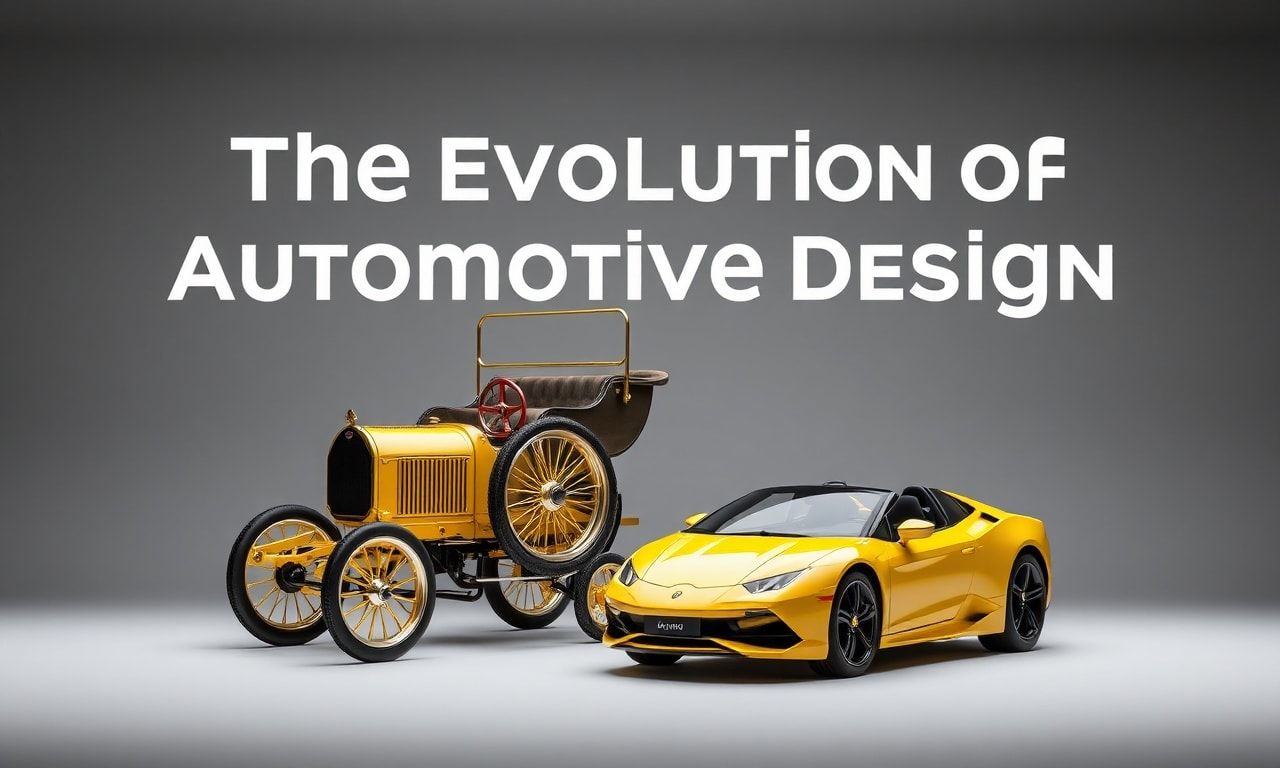
The Dawn of Automotive Design
The automotive industry has come a long way since its inception. The journey began with the invention of the horse-drawn carriage, which was the primary mode of transportation for centuries. The first significant milestone in automotive design was the creation of the steam-powered vehicle in the late 18th century. However, it was the internal combustion engine that truly revolutionized the industry. The late 19th and early 20th centuries saw the birth of the modern automobile, with pioneers like Karl Benz and Henry Ford leading the way.
The early automobiles were simple, utilitarian machines designed for basic transportation. They lacked the comfort, safety, and aesthetic appeal of today’s vehicles. However, they laid the foundation for the rapid evolution of automotive design. The early 20th century saw the introduction of features like electric starters, closed bodies, and improved suspension systems, which significantly enhanced the driving experience.
The Golden Age of Automotive Design
The mid-20th century is often referred to as the golden age of automotive design. This period saw the introduction of iconic models that are still celebrated today. The 1950s and 1960s were characterized by sleek, aerodynamic designs and powerful engines. Manufacturers like Ford, Chevrolet, and Volkswagen produced some of their most memorable models during this time. The introduction of features like power steering, air conditioning, and automatic transmissions further enhanced the driving experience.
The golden age also saw the rise of the muscle car, a high-performance vehicle that combined powerful engines with stylish designs. The Ford Mustang, Chevrolet Camaro, and Dodge Challenger are just a few examples of the iconic models that emerged during this period. The golden age of automotive design was not just about performance and style; it was also about innovation. The introduction of safety features like seat belts and crumple zones significantly improved vehicle safety.
The Influence of Culture and Society
The automotive industry has always been influenced by the cultural and societal trends of the time. The 1970s oil crisis, for example, led to a shift towards smaller, more fuel-efficient vehicles. The rise of environmental consciousness in the 1980s and 1990s led to the development of hybrid and electric vehicles. The automotive industry has also been influenced by the local art scene updates, with designers drawing inspiration from various art movements and trends.
The 1980s and 1990s saw the introduction of digital technology in automotive design. The use of computer-aided design (CAD) software allowed designers to create more complex and detailed designs. The introduction of airbags and anti-lock braking systems (ABS) further improved vehicle safety. The rise of the internet and social media has also had a significant impact on the automotive industry, with manufacturers using these platforms to connect with customers and showcase their latest designs.
The Modern Era of Automotive Design
The modern era of automotive design is characterized by a focus on sustainability, connectivity, and autonomy. The rise of electric vehicles (EVs) has been one of the most significant developments in recent years. Manufacturers like Tesla, Nissan, and Chevrolet have produced some of the most popular EV models on the market. The shift towards EVs is driven by a desire to reduce emissions and improve energy efficiency.
The modern era has also seen the introduction of advanced driver-assistance systems (ADAS), which use sensors and cameras to improve vehicle safety. Features like lane-keeping assist, adaptive cruise control, and automatic emergency braking are becoming increasingly common. The development of self-driving cars is another major trend in the automotive industry. Companies like Waymo, Tesla, and Uber are at the forefront of this technology, which promises to revolutionize the way we travel.
The Future of Automotive Design
The future of automotive design is likely to be shaped by advancements in technology and a growing focus on sustainability. The development of autonomous vehicles is expected to continue, with self-driving cars becoming more common in the coming years. The use of artificial intelligence (AI) and machine learning (ML) is also expected to play a significant role in the future of automotive design.
The shift towards sustainable mobility is another major trend that is likely to shape the future of automotive design. The development of hydrogen fuel cell vehicles (FCVs) is one area of interest, as these vehicles offer a zero-emission alternative to traditional internal combustion engines. The use of lightweight materials like carbon fiber and aluminum is also expected to become more common, as manufacturers seek to improve fuel efficiency and reduce emissions.
The future of automotive design is also likely to be influenced by the rise of the sharing economy. The popularity of ride-sharing services like Uber and Lyft has led to a shift in the way people think about car ownership. The development of shared mobility solutions, such as car-sharing and bike-sharing programs, is expected to become more common in the coming years. The use of connected technologies, such as vehicle-to-vehicle (V2V) and vehicle-to-infrastructure (V2I) communication, is also expected to play a significant role in the future of automotive design.
Conclusion
The automotive industry has come a long way since its inception, and the future looks bright. The evolution of automotive design has been driven by a desire to improve performance, safety, and sustainability. The rise of electric vehicles, autonomous driving, and connected technologies is set to revolutionize the way we travel. As the industry continues to evolve, it will be interesting to see how these trends shape the future of automotive design.